
 9560025568
 drbhavanasingla@gmail.com

Introduction
Infertility is a challenge faced by many couples worldwide. Thanks to advancements in reproductive medicine, treatments like In Vitro Fertilization (IVF) have helped millions achieve their dream of becoming parents.
If you and your partner are considering IVF, understanding the complete IVF process, success rates, and preparationcan help you feel more confident and prepared.
In this guide, fertility specialist Dr. Bhavana Singla explains everything couples need to know about IVF treatment step by step.
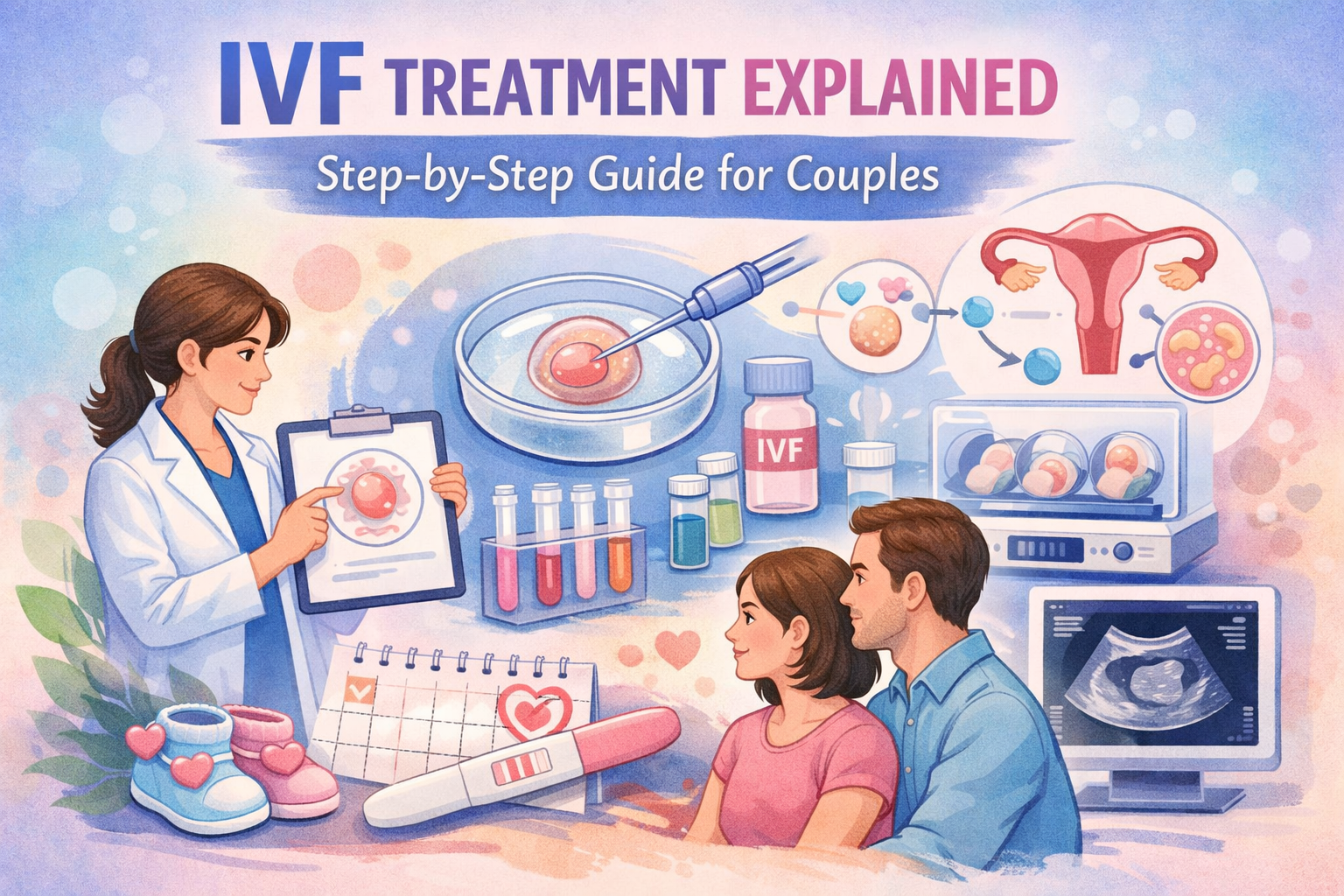
What is IVF Treatment?
In Vitro Fertilization (IVF) is an advanced fertility treatment in which eggs are fertilized with sperm in a laboratory outside the body. Once fertilization occurs, the resulting embryo is transferred into the uterus to achieve pregnancy.
IVF is one of the most effective fertility treatments available today and is recommended for couples experiencing various infertility issues.
Who Should Consider IVF?
Doctors may recommend IVF for couples dealing with the following conditions:
Female infertility causes
- Blocked or damaged fallopian tubes
- Ovulation disorders
- Endometriosis
- Advanced maternal age
Male infertility causes
- Low sperm count
- Poor sperm motility
- Abnormal sperm shape
Other situations
- Unexplained infertility
- Failed IUI treatments
- Genetic disorder prevention
A consultation with fertility expert Dr. Bhavana Singla can help determine whether IVF is the right treatment for you.
Step-by-Step IVF Treatment Process
Understanding the IVF journey helps couples feel more prepared. Here is how the process typically works.
1. Initial Fertility Consultation
The IVF journey begins with a detailed consultation and fertility assessment.
Doctors may recommend tests such as:
- Hormone testing
- Ultrasound scans
- Semen analysis
- Ovarian reserve testing
These tests help the doctor design a personalized IVF treatment plan.
2. Ovarian Stimulation
During this stage, fertility medications are prescribed to stimulate the ovaries to produce multiple eggs instead of just one.
The process usually lasts 8–14 days and involves:
- Hormonal injections
- Regular ultrasound monitoring
- Blood tests to check hormone levels
Producing multiple eggs increases the chances of successful fertilization.
3. Egg Retrieval Procedure
Once the eggs mature, a minor surgical procedure called egg retrieval is performed.
Key points:
- Procedure takes about 20–30 minutes
- Done under mild sedation
- Eggs are collected using ultrasound-guided needle aspiration
The retrieved eggs are then sent to the laboratory for fertilization.
4. Fertilization in the Laboratory
In the IVF lab, the eggs are combined with sperm to achieve fertilization.
Two common methods are used:
Traditional IVF
Eggs and sperm are placed together in a culture dish.
ICSI (Intracytoplasmic Sperm Injection)
A single sperm is injected directly into the egg.
Fertilization is confirmed within 24 hours.
5. Embryo Development
The fertilized eggs develop into embryos over the next 3–5 days.
During this stage:
- Embryologists monitor embryo growth
- The healthiest embryos are selected
- Some embryos may be frozen for future use
High-quality embryos significantly increase pregnancy success rates.
6. Embryo Transfer
Embryo transfer is a simple and painless procedure where the selected embryo is placed into the uterus.
Key facts:
- Takes only 10–15 minutes
- No anesthesia required
- Performed using a thin catheter
After the transfer, couples can usually return home the same day.
7. Pregnancy Test
Around 10–14 days after embryo transfer, a blood test is performed to confirm pregnancy.
This is often called the “two-week wait”, which can be emotionally challenging for couples.
If the test is positive, the pregnancy will be monitored closely through ultrasounds and blood tests.
IVF Success Rate
IVF success rates depend on several factors, including:
- Age of the woman
- Egg quality
- Sperm health
- Underlying fertility conditions
- Lifestyle factors
Women under 35 generally have higher success rates, while success may decrease with age.
Working with an experienced fertility specialist like Dr. Bhavana Singla can significantly improve the chances of success.
Tips to Improve IVF Success
Couples can improve their chances of IVF success by following these tips:
Maintain a healthy lifestyle
- Eat a balanced fertility diet
- Exercise regularly
- Maintain a healthy weight
Avoid harmful habits
- Quit smoking
- Limit alcohol consumption
- Reduce caffeine intake
Manage stress
Fertility treatments can be emotionally demanding. Meditation, yoga, and counseling can help manage stress levels.
When to Consult a Fertility Specialist
You should consider consulting a fertility doctor if:
- You have been trying to conceive for more than one year
- You have irregular menstrual cycles
- You are over 35 and struggling to conceive
- You have known fertility conditions like PCOS or endometriosis
Early diagnosis and treatment can significantly improve pregnancy outcomes.
Conclusion
IVF treatment has transformed the lives of millions of couples struggling with infertility. Understanding the IVF process, preparation, and success factors helps couples make informed decisions about their fertility journey.
With expert guidance and advanced reproductive technology, IVF offers hope for many couples who dream of starting a family.
For personalized fertility evaluation and treatment options, consult experienced fertility specialist Dr. Bhavana Singla.