
 9560025568
 drbhavanasingla@gmail.com


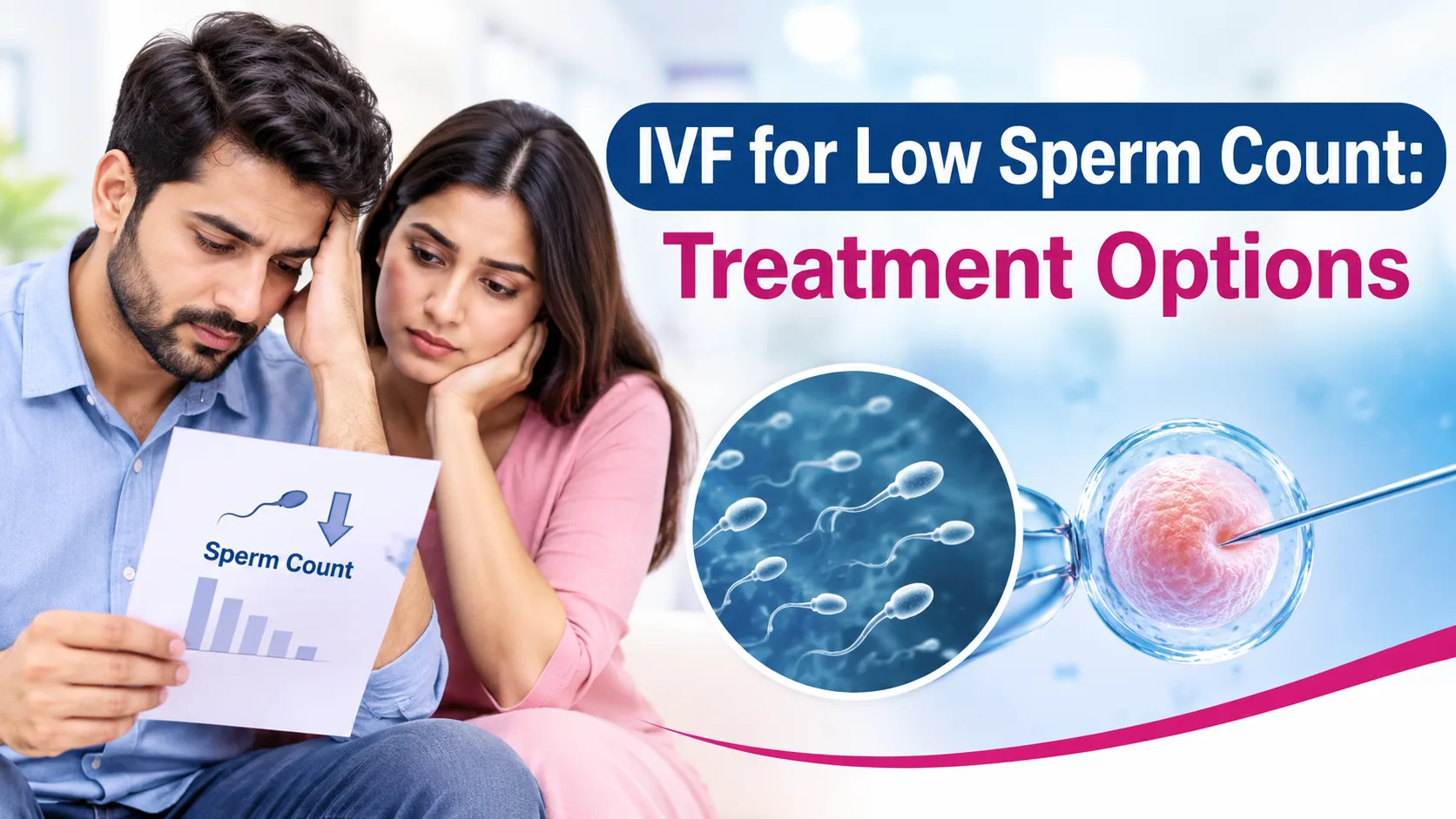
Trying to conceive can become emotionally challenging when a semen analysis shows a low sperm count. However, a low sperm count does not automatically mean that pregnancy is impossible. Today, several fertility treatments can help couples achieve pregnancy, depending on the severity and cause of the male fertility problem.
For couples facing male-factor infertility, understanding the available options from lifestyle changes and medical treatment to IVF and ICSI can make the journey feel more manageable.
What Does a Low Sperm Count Mean?
A low sperm count, medically known as oligospermia, means that the number of sperm present in the semen is lower than the expected reference range. However, sperm count is only one part of male fertility.
Doctors also consider:
- Sperm motility, or how well the sperm move
- Sperm morphology, or their shape
- The total number of motile sperm
- The overall reproductive health of both partners
A single semen test does not always provide the complete picture. When a result is abnormal, a repeat test and further evaluation may be recommended because sperm production and semen quality can vary over time.
What Are the Options When the Husband Has a Low Sperm Count?
The right treatment depends on the severity of the sperm problem, the woman’s age and fertility health, and how long the couple has been trying to conceive.
1. Treating the Underlying Cause
In some cases, low sperm count may be linked to a treatable condition. A specialist may evaluate factors such as hormonal issues, infections, varicocele, previous medical history, or lifestyle factors.
Treatment may help improve sperm production in selected cases. However, not every case of low sperm count can be corrected with medicines alone, which is why a proper male fertility evaluation is important.
Both partners should be assessed together rather than focusing only on the semen report.
2. Lifestyle Changes
Healthy lifestyle changes may support overall reproductive health. Depending on the individual’s situation, a doctor may advise maintaining a healthy weight, exercising regularly, avoiding smoking and tobacco, limiting alcohol, and reducing exposure to excessive heat or harmful substances.
It is important to remember that lifestyle changes are not an instant solution. Sperm production takes time, and improvements may not be enough in cases of severe male-factor infertility.
3. IUI for Selected Couples
Intrauterine insemination (IUI) may be considered in some couples with mild male-factor infertility. During IUI, prepared sperm are placed inside the uterus around the time of ovulation.
However, when the number of healthy, motile sperm is significantly low, the chances of success with IUI may be reduced. In such situations, IVF or ICSI may offer a more suitable path.
4. IVF With ICSI: A Common Option for Low Sperm Count
For many couples with significant male-factor infertility, ICSI (Intracytoplasmic Sperm Injection) can be performed as part of an IVF cycle.
In conventional IVF, eggs and sperm are placed together in a laboratory, allowing fertilisation to occur naturally. With ICSI, an embryologist selects a suitable sperm and injects it directly into a mature egg.
This technique can help overcome problems related to low sperm count, poor motility, or certain other sperm abnormalities when viable sperm are available. ICSI was originally developed to improve fertilisation in cases of male-factor infertility.
What If There Are Very Few or No Sperm in the Semen?
In cases of very severe low sperm count or azoospermia, where no sperm are found in the ejaculate, further evaluation is needed to understand the cause.
For selected patients, sperm may be retrieved directly from the reproductive tract or testicles using specialised procedures. Depending on the underlying condition, techniques such as surgical sperm retrieval or micro-TESE may be considered, and the retrieved sperm can potentially be used with ICSI.
Not every patient requires the same procedure. The treatment plan should be based on a detailed evaluation by fertility and male reproductive specialists.
Does Low Sperm Count Affect IVF Success?
Low sperm count is an important factor, but it is not the only factor that determines IVF success. The woman’s age, egg quality, embryo development, uterine health, the underlying cause of infertility, and several other factors can influence the outcome.
For this reason, couples should avoid comparing their situation with someone else’s IVF journey. A personalised treatment plan is usually the best approach.
When Should You See a Fertility Specialist?
If you have been trying to conceive without success or have received an abnormal semen analysis report, it is a good idea to seek professional advice. Early evaluation can help identify whether the problem is mild, treatable, or requires assisted reproductive treatment.
A Personalised Approach to Male-Factor Infertility
Low sperm count can feel discouraging, but modern fertility treatment offers several options. From addressing underlying causes to using IVF with ICSI or sperm retrieval techniques in selected cases, the right approach depends on the couple’s individual situation.
Dr. Bhavana Singla, IVF Specialist in Moti Nagar, Delhi, believes in a personalised and compassionate approach to fertility care. A detailed evaluation of both partners can help identify the most appropriate treatment options and guide couples through their fertility journey with clarity and confidence.
Desclaimer: Medical information in this article should be used for general awareness and does not replace an individual consultation or personalised medical advice.