
 9560025568
 drbhavanasingla@gmail.com

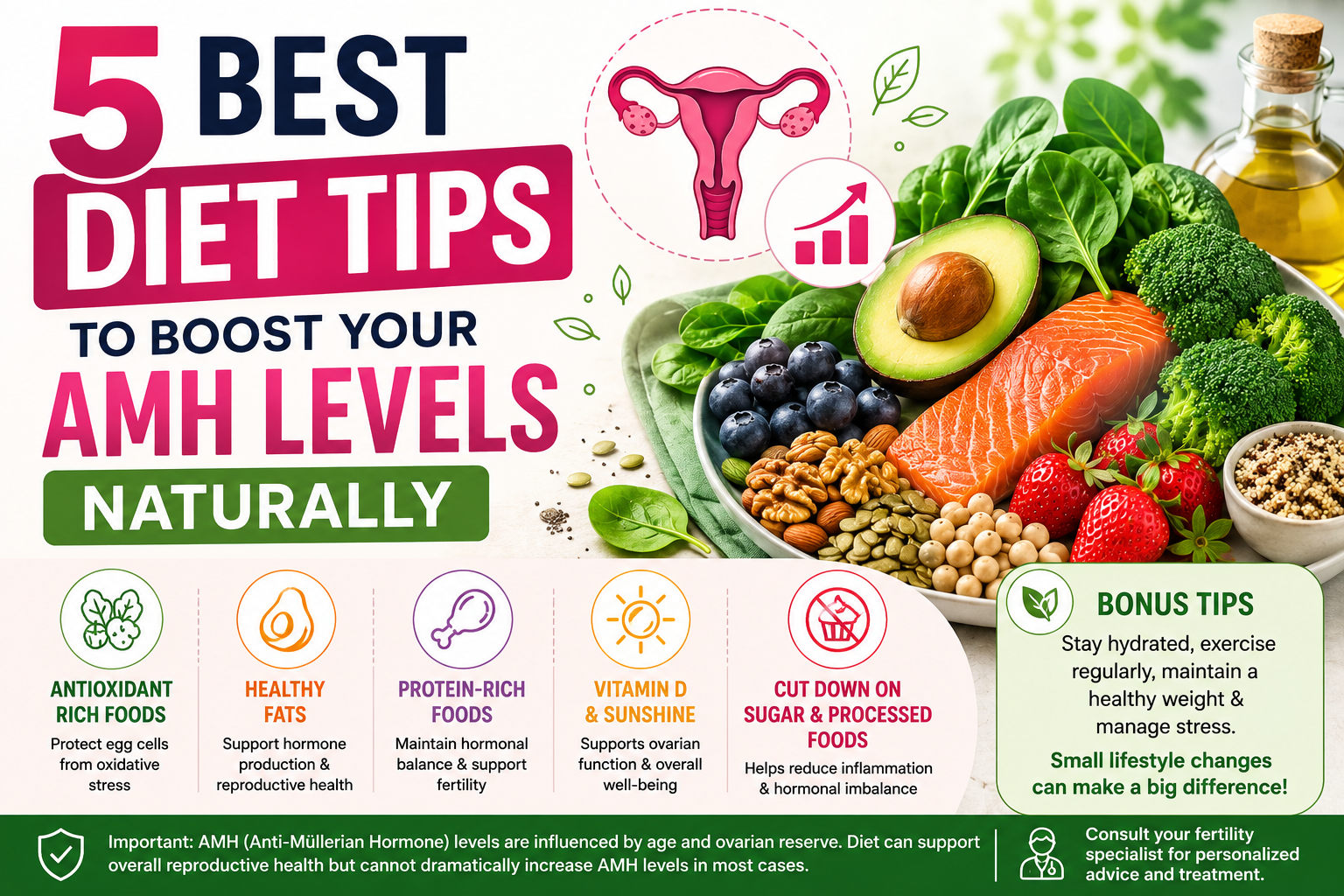
When couples begin their fertility journey, one of the most common tests recommended for women is the AMH (Anti-Müllerian Hormone) test. AMH is an important marker that helps assess ovarian reserve, which refers to the number of eggs remaining in a woman’s ovaries. While age remains the biggest factor influencing AMH levels, adopting a healthy diet and lifestyle can help support overall reproductive health and ovarian function.
Although no specific food can dramatically increase AMH levels, certain nutrients may contribute to better hormonal balance, reduced oxidative stress, and improved fertility outcomes. Here are five dietary tips that can support your reproductive health naturally.
1. Include Antioxidant-Rich Foods Daily
Oxidative stress can negatively affect egg quality and ovarian function. Antioxidants help protect the body’s cells, including reproductive cells, from damage caused by free radicals.
Add colorful fruits and vegetables to your meals, such as berries, oranges, spinach, kale, broccoli, bell peppers, and tomatoes. These foods are rich in vitamins C and E, beta-carotene, and other antioxidants that support overall fertility health.
Aim to include at least five servings of fruits and vegetables every day for maximum benefits.
2. Choose Healthy Fats for Hormonal Balance
Hormones play a critical role in fertility, and healthy fats are essential for hormone production. Replacing unhealthy trans fats with nutrient-dense healthy fats may help support reproductive function.
Good sources of healthy fats include avocados, walnuts, almonds, flaxseeds, chia seeds, olive oil, and fatty fish such as salmon and sardines. Omega-3 fatty acids found in these foods are known for their anti-inflammatory properties and potential benefits for fertility.
Including a handful of nuts or seeds daily can be a simple step toward better reproductive health.
3. Prioritize High-Quality Protein Sources
Protein is essential for tissue repair, hormone production, and overall reproductive wellness. Women trying to conceive should focus on consuming a balanced mix of plant-based and lean animal proteins.
Excellent choices include eggs, lentils, chickpeas, beans, paneer, tofu, fish, and lean poultry. These foods provide essential amino acids that support healthy body function and fertility.
Try replacing processed snacks with protein-rich alternatives to maintain stable energy levels and support hormonal balance.
4. Maintain Adequate Vitamin D Levels
Research suggests that Vitamin D may play an important role in ovarian function and reproductive health. Unfortunately, Vitamin D deficiency is quite common among women of reproductive age.
Natural sources include sunlight exposure, egg yolks, fortified dairy products, mushrooms, and fatty fish. Depending on your levels, your fertility specialist may also recommend Vitamin D supplementation.
Regular testing can help identify deficiencies and ensure optimal levels for overall health and fertility.
5. Reduce Processed Foods and Excess Sugar
Highly processed foods, sugary beverages, and refined carbohydrates can contribute to inflammation and insulin resistance, which may negatively impact hormonal health.
Instead, focus on whole grains, fresh fruits, vegetables, lean proteins, and healthy fats. Limiting packaged snacks, sugary desserts, soft drinks, and fast food can support a healthier reproductive environment.
Making small dietary changes consistently often yields better long-term results than restrictive diets.
Final Thoughts
AMH levels naturally decline with age, and diet alone cannot significantly reverse this process. However, a nutritious, balanced diet can support ovarian health, improve overall well-being, and create a favorable environment for fertility.
If you are concerned about your AMH levels or are planning a pregnancy, consult a fertility specialist for personalized evaluation and guidance. Every fertility journey is unique, and the right combination of medical care, nutrition, and lifestyle support can make a meaningful difference.
About the Author
Dr. Bhavana Singla is a Fertility Specialist dedicated to helping couples achieve their dream of parenthood through evidence-based fertility care, personalized treatment plans, and compassionate guidance.